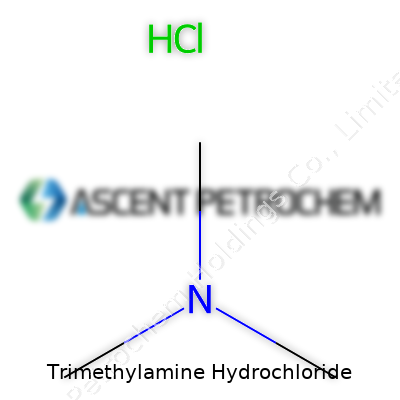
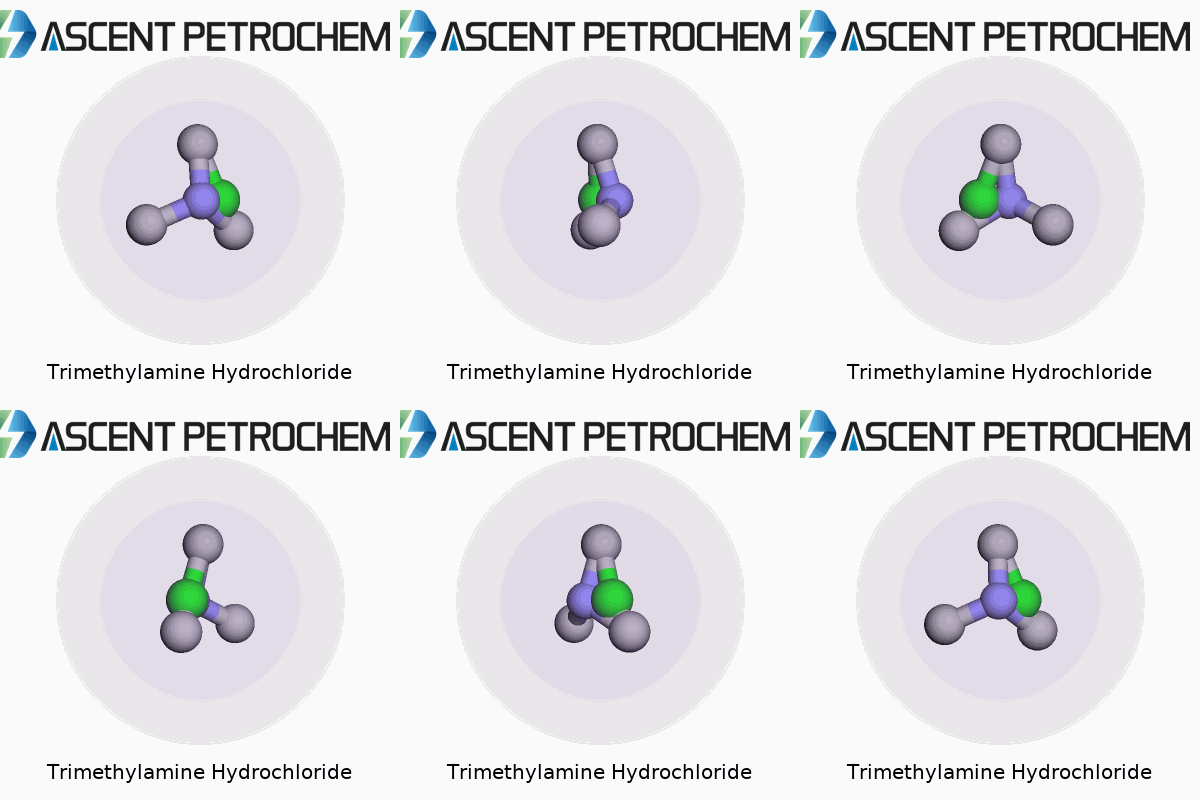
Trimethylamine hydrochloride has been around since the growth of modern organic chemistry. Chemists started isolating and characterizing small amines as they pushed into the chemical compositions of natural substances in the 19th century. Its parent amine, trimethylamine, popped up in early studies on nitrogen compounds in fish and plant matter. The hydrochloride salt form became important because of easier storage and improved handling compared to volatile gaseous trimethylamine. Many early lab manuals listed procedures for preparing the salt as a basic exercise in handling amine hydrochlorides, revealing its central spot in the toolkit of organic synthesis before mass spectrometry or chromatography guided synthetic routes.
Trimethylamine hydrochloride appears as a white, crystalline powder, slightly caustic to the touch. Chemists value the product because it dissolves quickly in water, forms stable solutions, and handles well in the bench’s day-to-day workflow. This compound usually comes in tightly sealed drums or glass bottles, shielding its pungency while reducing moisture pickup. Certain pharmaceutical and fine chemical syntheses keep it stocked thanks to its predictable behavior during preparation and reactivity in forming nitrogen-based intermediates.
Examining its physical makeup, trimethylamine hydrochloride usually shows a melting point near 230°C with decomposition, and has a strong, fishy-amine odor that’s instantly recognizable. The compound clumps unless kept dry, so airtight gadgets stay in play whenever it’s in use. Water grabs onto it pretty quickly—it dissolves rapidly, and barely any resistance pops up from organic solvents like alcohol and ether. Its ionic nature means the salt conducts in solution. Chemically, the hydrochloride remains stable under normal lab conditions, but strong bases quickly revert it to trimethylamine, which flashes off as a gas.
Reputable suppliers provide trimethylamine hydrochloride with purity ranging from 98% upwards, with moisture content less than 1%. Specifications demand clear documentation: batch numbers, certifications, origin point, and analytical validation results. Labels include hazard pictograms, storage guidance, and safety information because most regulatory agencies classify this compound as hazardous due to its corrosive qualities and potential for skin and respiratory irritation. Lab users should double-check confirming CAS numbers and chemical formula—C3H10NCl—for proper tracking and audit purposes.
Manufacturers synthesize trimethylamine hydrochloride by reacting trimethylamine gas with concentrated hydrochloric acid. The method produces a white solid almost instantly, showing gas-liquid reactions can go right to completion under the right circumstances. The exothermic reaction means proper ventilation and controlled acid addition matter a lot to avoid heat buildup. Industrially, the operation scales by bubbling the amine through cold hydrochloric acid under anhydrous conditions, which prevents dilution and ensures high yield. After reaction, filtration and drying under vacuum completes the job, producing a product meeting most purity standards without major purification steps.
Chemists rely on trimethylamine hydrochloride for its manageable, well-defined reactivity. It acts as a convenient source for generating free trimethylamine in solution, which facilitates methylation, quaternization, and certain alkyl transfer reactions. For forming quaternary ammonium salts, the hydrochloride offers predictability, as it releases the amine only when the right base is present. This selectivity reduces off-target side reactions in complex multi-step syntheses. Modification possibilities stretch beyond the lab, entering the world of basic research on nitrogen transfer, biological labeling, or pharmaceutical intermediate formation. Control comes from its ability to deliver free trimethylamine without dealing with pressurized gas cylinders—which, speaking from experience, complicates everyday lab routines.
Products in catalogs or lab supply bins show up under different aliases: trimethylamine hydrochloride, methyltrimethylammonium chloride, and N,N-dimethylmethanaminium chloride. Researchers might bump into archaic names like TMA-HCl, especially in older spectra or procurement records. No matter the synonym, clear labeling and CAS reference—593-81-7—keeps ordering mistakes at bay. Some suppliers personalize the branding, but for all practical communication and registry, the chemical formula and name stand as universal markers in the literature.
Handling trimethylamine hydrochloride asks for a careful hand, since careless exposure brings skin and respiratory irritation. Inhaling dust or contacting solution invites a stinging sensation at the very least, and can trigger coughing or skin redness. Storage should always occur in cool, well-ventilated rooms, with containers tightly capped and kept away from oxidizing agents or strong bases. Most workplaces require goggles, nitrile gloves, and standard lab coats for handling. Fume hoods manage airborne vapors formed if the salt contacts moisture. Spills get cleaned promptly with water, and contaminated materials enter designated hazardous waste streams. Regular emergency practice helps safeguard teams—no shortcut replaces hands-on familiarity with spill kits and first aid.
Trimethylamine hydrochloride finds a place in research and industry: as a lab reagent for methylation, a starting material for quaternary ammonium compounds in water treatment, and as an intermediate for pharmaceutical, dye, and surfactant synthesis. Chemical manufacturers use it to deliver methyl groups to amines and phosphines, supporting synthesis of antiseptics, textile softeners, and specialty chemicals. Even in biochemistry, it plays a part as a model amine or structural mimic in analytical studies. My own time working with drug intermediates put this compound on the reagent shelf for targeted methylations, showing how its controllability bridges bench research and pilot-scale production.
The story of trimethylamine hydrochloride keeps growing as new research angles open up. Chemists test its behavior in forming new types of surfactants meant for gentler cleaning agents or recyclable polymers. Pharmaceutical scientists continue probing its role as an alkylation partner, potentially speeding the preparation of active drug molecules. Materials science projects explore amine-based building blocks for advanced batteries and light-emitting diodes; here, salts like trimethylamine hydrochloride receive regular evaluation for purity, shelf life, and compatibility with next-generation technologies. The compound hasn’t lost relevance in basic research, where newcomers to synthetic chemistry rely on its approachable reactivity to master methyl transfer and salt formation.
Extensive data shows improper exposure to trimethylamine hydrochloride has impacts—from moderate skin irritation to acute respiratory symptoms if inhaled in dust form. Oral toxicity sits at moderate levels, and animal studies raise red flags for chronic exposure, including liver and kidney effects. Regulatory guidance classifies it as hazardous, triggering strict guidelines for personal protective equipment and workspace monitoring. Environmental releases could affect aquatic systems—eutrophication risk rises where nitrogen compounds accumulate—so containment and emergency procedures stay sharp. Workplace safety culture, real hazard communication, and medical monitoring help reduce harm, but long-term studies continue to check low-dose effects, especially in chemical production hubs.
Looking ahead, demand for trimethylamine hydrochloride is on the rise, fuelled by growth in pharmaceutical and specialty chemical manufacturing. As companies refine more efficient, targeted drug molecules, reliance on well-characterized methylating agents like this one increases. Sustainable chemistry may transform the way it is produced, with new catalysts offering lower-temperature, lower-emission methods for both trimethylamine and hydrochloride generation. Advanced environmental controls and closed-system operations could minimize human and ecosystem risks. Synthetic biology and green chemistry both eye the amine family for custom biomolecule production, with this classic salt likely finding new life as a biomanufacturing intermediate. Whether in established chemical plants or state-of-the-art research benches, trimethylamine hydrochloride stands at a productive crossroads—the road ahead shaped by careful stewardship, safety, and relentless innovation.
Trimethylamine hydrochloride isn’t something most people encounter on their daily grocery run, but in my experience working around laboratories, this compound turns up in some pretty surprising places. It starts its journey as trimethylamine, a pungent compound that comes with an unmistakable fishy odor. You’ll usually find it in gas form, but combine it with hydrochloric acid, and you end up with a white, crystalline salt: trimethylamine hydrochloride.
Chemists reach for trimethylamine hydrochloride in a variety of settings. One of the most practical reasons comes down to its role as a building block. Industry looks for quick, reliable precursors for the chemicals needed every day, and this particular compound fits that bill. People in pharmaceutical labs use it to create drugs that treat infections and lung disease, including medicines like the well-known expectorant ambroxol hydrochloride. That means, in a small way, it ends up playing a role in easing coughs and clearing airways for people fighting respiratory sickness. It also shows up when making certain antihistamines and drugs that affect the nervous system.
Lab workers prize trimethylamine hydrochloride because it handles well and reacts reliably. In organic synthesis—the craft of building new molecules—it acts as a source of the trimethylamino group. These chemical groups get attached to other molecules to create compounds with electric charge or those that mimic how nerves send signals. I remember chatting with fellow techs who found this reagent indispensable for routes that needed quick transfer of a methyl group, skipping several headache-inducing alternative pathways.
Beyond medicine, this compound plays its part in the broader world of research and manufacturing. Some folks in agriculture tap it as an intermediate for making fungicides and pesticides. You’ll even spot it in water treatment, playing a role as a corrosion inhibitor—a practical problem most urban infrastructure faces but rarely gets talked about in everyday conversation.
Modern food science leans on chemistry, too, and you might uncover traces of trimethylamine derivatives in the processing of certain flavoring agents. They don’t just add or amplify taste; their presence affects shelf life and safety. Back in the lab, researchers have looked into its use in phase-transfer catalysis, shaving the time and waste off chemical production. I’ve seen research teams cite examples where this compound improved the process for creating dyes and solvents, cutting down on both toxic byproducts and energy bills.
While it’s a handy reagent, handling trimethylamine hydrochloride isn’t without headaches. Anyone who’s spent time working with it will warn you about eye and respiratory irritation, and nobody forgets the awful fishy smell that leaks into the air if a vent fails. Safety data sheets recommend gloves, eye protection, and good ventilation. On a personal note, nobody in the lab appreciated tempers flaring over someone forgetting to cap the bottle tightly—experience proves that smell lingers for days.
There’s a bigger picture here too. Chemicals like this highlight how careful handling and updated safety protocols matter for both workers and the environment. Waste streams containing trimethylamine compounds need proper treatment, both for regulatory compliance and for the practical reality of keeping waterways clean. Factories have shifted toward capturing emissions and recycling chemical leftovers. These steps don’t just tick a box—they protect workers’ health and preserve the environment for everyone living nearby.
We depend on specialty chemicals like trimethylamine hydrochloride to make medicine, keep pipes running clean, and build new materials. The challenge comes in balancing utility with responsibility—ensuring every shipment ends up in the right hands and not polluting air or water. Investment in advanced filtration, closed-loop systems, and staff training has made a difference. People in science and industry have a responsibility to keep learning from experience and push for safer, cleaner processes that don’t lose sight of real-world impact.
Most people pass by chemicals in their daily lives without a second thought; I did too until I started working around labs and factories. Chemicals like trimethylamine hydrochloride may sound like something you’d never cross paths with outside of an industry setting, but stories of mishandling remind us the risk isn’t as distant as it seems.
You may notice the name shows up in specialty manufacturing or research. It’s basically a white, crystalline solid that comes with a salty, fishy odor. From the get-go, that fish smell alone signals you want to keep it far away from food prep or anything to do with breathing space. It dissolves easily into water which helps move it from one place to another in a factory, but also means it could make a mess if a spill isn’t handled quickly.
I’ve had to double-check more than one safety sheet working with chemicals in the lab, and trimethylamine hydrochloride sure stood out for a couple of reasons. Breathing in its vapors brings on coughing, shortness of breath, or a burning feeling in your throat. Direct contact with the skin or eyes can leave you looking for an eyewash station or washing station in a panic. One time, after a minor spill, a coworker ended up with pretty severe eye redness and irritation, and we were reminded how basic protection makes all the difference.
Inside a research setting, trimethylamine hydrochloride’s tendency to give off hydrogen chloride gas if heated shouldn’t be ignored. That gas can kick up even more trouble. Hydrogen chloride irritates lungs and, if someone ignores a leak, can lead to bigger health issues. The thing is, even folks who think they know what they’re doing can get too casual. Sloppy habits and forgotten goggles send more people to the nurse’s office than you’d think.
Looking at the data, trimethylamine hydrochloride isn’t one of the most deadly chemicals on earth, but it packs enough punch you don’t want to gamble with it. Swallowing it may not kill you outright, but it’s going to hurt your mouth, throat, and stomach and could drive you to the ER. Inhaling too much can land you in a hospital bed, especially if you already have asthma or lung problems.
Long-term exposures may set you up for chronic effects, though evidence for permanent damage from ordinary industry use is weak. But that only holds true if people follow basic safety routines: gloves, goggles, proper ventilation, prompt cleanups. Skipping protective gear out of impatience isn’t just dangerous, it’s how accidents turn deadly.
What works? Training makes the biggest difference. Having vivid, hands-on safety drills and posters that don’t just gather dust on a wall can shake people out of bad habits. Proper storage, in sealed containers far from food or direct sunlight, limits accidental leaks. Investing in fume hoods and eye-wash stations pays off as soon as something goes wrong.
Ultimately, respect for this compound means never getting too comfortable around it. The best protection comes from a healthy pinch of caution, the right equipment, and habits built up before things go wrong. Every time someone keeps a pair of goggles on, they might be dodging a trip to the ER—sometimes, that’s what real safety looks like.
Anyone working in a lab knows chemicals like trimethylamine hydrochloride don’t forgive mistakes. A small mishap, a bit too much humidity, the wrong container—each can turn a safe routine into a cleanup operation. This salt, recognizable for its strong odor and crystalline texture, can seem straightforward. Yet experience teaches that improper storage brings headaches, from ruined equipment to unwanted exposure risks.
Trimethylamine hydrochloride’s main quirk lies in its strong smell and tendency to absorb water from the air. Place it on a shelf in a warm, humid storeroom, and soon enough it will clump. Mismanaged storage leads to container corrosion, leaks, and sometimes, product degradation. I’ve opened supposedly sealed bottles only to find solid clumps sticking to lids, making accurate weighing nearly impossible. These aren’t just nuisances. Moist crystals might compromise experiments and create extra hassles for environmental health and safety teams.
Several years of hands-on work with this substance shaped my storage habits. First, temperature matters. This compound holds up best in a cool, dry place—think of a chemical cabinet with reliable ventilation. Room temperature is fine if the space stays below 25°C; hot storerooms drive up vapor release and odors. Direct sunlight triggers both heat and light exposure, which always increases risk in a storeroom.
Humidity sneaks up everywhere. Desiccators with working silica gel—or well-maintained dry cabinets—help keep air dry and powder loose. An air-tight, chemical-resistant container is not optional; standard laboratory screw-cap bottles (HDPE or polypropylene) seal tightly and reduce vapor release. Glass works, but only if checked regularly for corrosion around the neck and lid. Always label containers with open and close dates. If the seal weakens, the risk of moisture climbing inside rises.
Trimethylamine hydrochloride isn’t as volatile or unstable as many lab chemicals, but even routine handling can go wrong. Store it on a lower shelf, never above eye-level—gravity is an underrated safety measure. This lessens the odds of splashing dust onto yourself or coworkers during unintended spills. Spilled powder isn’t just unpleasant to clean; inhaling vapors can irritate eyes and respiratory passages.
I worked in a shared facility where an unlabeled, crumbling jar sat open for weeks. More than a few of us felt the effects—persistent headaches and strong odors that stuck to clothes. Good labeling and regular inventories aren’t bureaucratic chores; they save time, money, and health. Mark the purchasing and opening date on any trimethylamine hydrochloride bottle, and discard old material. Lingering for years on the back shelf does the compound no favors, often leading to unusable gunk and extra hazardous waste disposal fees.
Keep away from moisture. Anhydrous environments prevent clumping and keep quality high.Use air-tight, chemical-resistant containers. HDPE, polypropylene, or glass with intact seals work well.Store in cool, shaded, well-ventilated locations. No direct sunlight or heat sources.Label and date all containers. Track age and usage for best safety practices.Place on lower shelves. Cuts risks from spills or shifting containers.
There’s more to chemical storage than following rules on a safety sheet. The right habits keep trimethylamine hydrochloride where it belongs—in the experiment, not contaminating the whole workspace. Regular checks and a disciplined approach save both frustration and resources, letting everyone in the lab focus on results, not cleanup.
Trimethylamine hydrochloride draws attention in labs because of its recognizable structure and strong smell. The compound forms when trimethylamine gas reacts with hydrochloric acid. This transformation creates a solid substance that stores easily and handles without much fuss. The smell, often described as fishy, grabs notice even in tiny amounts—reminding me of forgotten seafood in the back of a fridge. Anyone working with it learns to respect both its pungency and its utility.
In pure form, trimethylamine hydrochloride appears as white, slightly crystalline powder. The crystals dissolve smoothly in water, making it handy for solution work. Most find its odor unmistakable—not a gentle whiff, but something that hangs in the air and sticks to surfaces. Extra care goes into storage, since moisture can cause clumping and release the odor faster.It melts at about 231 degrees Celsius. Compared to other amines, it handles heat well up to that point without much change in appearance. Solubility stays high in water—practically every part dissolves, unlike some other salts that need tough mixing. Alcohol accepts it too, giving chemists more options for recipes and extractions.
Chemically, this compound acts as a salt of a tertiary amine, so it brings up a different set of reactivities than plain trimethylamine. The hydrochloride salt remains stable under normal environmental conditions. Base exposure reverses it back into trimethylamine, which releases as a gas and brings back that strong smell.
In reactions, it provides a ready source of the trimethylammonium ion. Scientists use it in organic synthesis, especially when a methyl group donor or strong nucleophile is needed. Over my years in the lab, it's proven helpful in preparing quaternary ammonium compounds and as a catalyst in some polymer reactions. Pharmaceutically, its behavior as a salt means it often makes medicines more shelf-stable and easier to process.
Exposure to trimethylamine hydrochloride often means coming face-to-face with an odor that most people try to avoid. The compound doesn’t pose the same flammability risks as gaseous trimethylamine, but inhaling dust or fumes can irritate eyes, skin, and lungs. Wearing gloves and goggles at the bench or plant site feels like common sense after just a whiff of this stuff.The salt form ships better than the gaseous base and reduces risk during long transit, explaining its popularity for both industrial and research buyers. Disposal practices should focus on neutralizing the compound before flushing, and containment keeps the sharp odor from traveling.
Trimethylamine hydrochloride works as a building block in several important chemical syntheses. Having handled it for projects in pharmaceuticals and polymers, I’ve seen how its stability, water solubility, and reactive potential make it valuable. Respect for its odor and irritation risk keeps lab workers careful. Good ventilation, sealed containers, and prompt clean-up create a safer workplace and let research move forward without distraction from strong smells or skin irritation.
Chemists appreciate substances that provide both reliability and versatility. Trimethylamine hydrochloride hits both marks—fitting into many experiments, making new compounds, and keeping storage simple. Its quirks, like the sharp smell, remind us that even tiny molecules can demand big respect in daily practice.
Trimethylamine Hydrochloride isn’t just another chemical on the shelf — it’s sharp-smelling and powerful. Anyone who’s ever worked in a lab knows how quickly accidents happen if you aren’t mindful. This compound can sting your nose, catch you off guard, and set off all sorts of trouble if you rush into handling it without the right habits.
Trimethylamine Hydrochloride is known for its pungent fishy odor, which makes it easy to spot, but that doesn’t mean it’s safe. Breathing in its vapor can irritate your respiratory tract. Getting it on your skin may not seem too bad at first, but it can cause redness or even burns if you don’t wash it off quickly. Splashing it in your eyes leads to real pain and possible damage.
Years back, I remember someone in our research group opening a jar too quickly, and the waft of odor chased folks out of the room. No serious harm, but it proved how being rushed breaks your focus — and your nose pays the price. Working with any volatile compound calls for real respect for the rules.
No one walks into a workspace full of fumes or dust without good gear. Nitrile gloves keep this chemical off your hands. Lab coats stop accidental drops from soaking through and staining your clothes or touching your skin. Safety goggles defend your eyes from unexpected splashes. If your workspace is tight or poorly ventilated, a fitted mask with the right filter does more than keep smells away; it helps you breathe easy and avoid headaches or worse.
It’s tempting to skip gear when you’re familiar with the chemical, but the stories about small exposures turning into big problems are true. Wearing your PPE every time means those stories stay just that — stories.
Good air flow isn’t just something for comfort. Local exhaust systems or fume hoods keep vapors from building up around you. Fume hoods might seem overkill for measuring a few grams, but try working a full day with the smell of ammonia hanging over you. It drags you down and stains everything with that fishmarket scent.
If you’re cresting over the scale from milligrams to larger batches, double check that the hood is running, and don’t block the vents. The harder you try to cut corners, the stronger the reminder that Trimethylamine Hydrochloride isn’t forgiving.
Dry, cool places far from acids or open flames give you peace of mind. Tightly sealed containers cut down on leaks and keep those odors where they belong. Labeled bottles that nobody mistakes for sugar or salt protect everyone in shared spaces.
Spills can turn from unpleasant to hazardous. Paper towels and gloves manage small spots. Larger spills call for a chemical spill kit and quick action. Ventilate the area, clean up without delay, and always get rid of the waste according to local rules. In places where I’ve worked, a slip-up with disposal almost led to a surprise inspection — the cost of carelessness isn’t worth it.
Safe habits start with good training. Newcomers should see the right way to transfer, measure, and store Trimethylamine Hydrochloride. Experienced hands stick to the checklist every time, never skipping steps in the name of speed.
The safety data sheet is more than paperwork: it’s a map to safer days. Keep it nearby. Talk openly about what went wrong and what you learned, so nobody repeats mistakes. Safety in a lab is about looking out for yourself and everyone around you.