Tetraethylammonium chloride turned up in laboratories during the early 20th century. Chemists back then had their eyes set on exploring quaternary ammonium compounds, and through systematic work, they landed on tetraethylammonium chloride. Progress in physical chemistry helped researchers examine its structure and behavior, and by the 1950s it started showing up in neurophysiology research. It didn’t just get attention for theoretical reasons; scientists saw how this salt impacted nerve and muscle function. Tetraethylammonium chloride quickly moved out of obscurity and into textbooks, with its practical impact unfolding steadily over the decades.
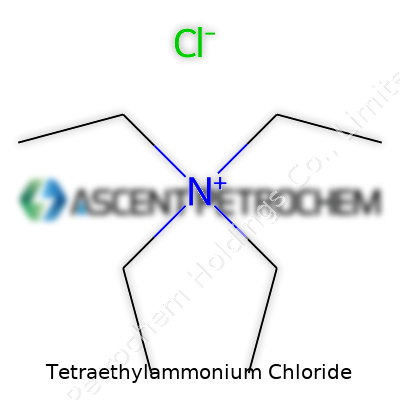
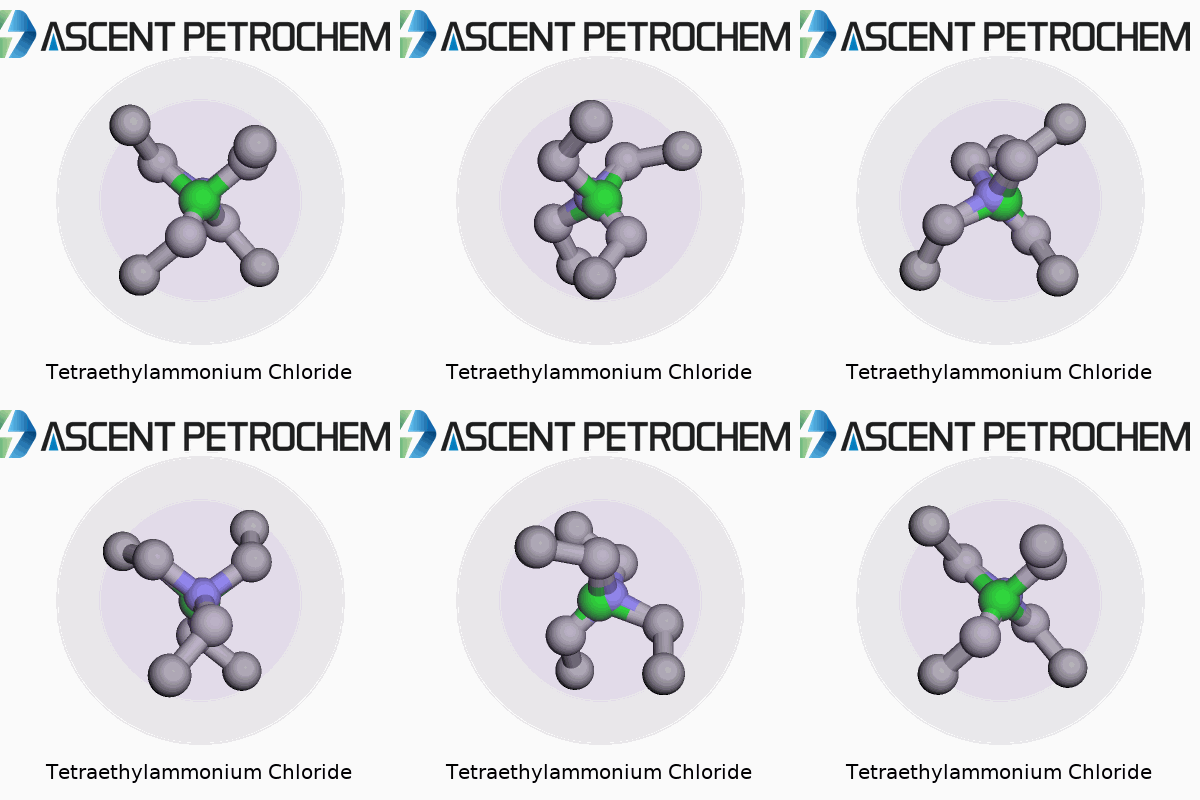
Tetraethylammonium chloride’s structure is straightforward: four ethyl groups attached to a central nitrogen atom, with a chloride counterion. This gives the salt its stability and makes it popular in research labs. Bottles labeled “TEA-Cl” or “Tetraethylammonium Chloride” appear on shelves in pharmacology and physiology departments around the world. Custom packaging and purity grades can help meet the different research needs, from bulk industrial containers to small high-purity batches for analytical work.
This compound comes across as a white crystalline powder, easy to spot and measure. Its melting point hovers around 285 ℃, and it dissolves well in water and alcohol, which lets it blend smoothly into solutions for lab experiments. It doesn’t have a strong odor, and its chemical stability under ambient conditions helps researchers handle and store it without much fuss. The ionic nature of TEA-Cl allows it to dissociate in water, making it useful in electrophysiological setups and reaction media. Its density and other physical characteristics remain consistent, provided you avoid contaminants from humidity or improper storage.
Bottles typically state purity, origin, batch number, and recommended storage conditions. Purity levels can run above 98%, and safety symbols make appearances owing to the chemical’s physiological effects. Labels tend to show information about compatibility with other reagents, which plays a role in lab safety and experiment success. Some suppliers include GC or HPLC trace results, helping researchers judge whether the batch will suit sensitive experiments. Knowing the specific labeling requirements protects users and ensures legal compliance in both academic and industry settings.
If you look at the manufacturing process, it usually involves reacting tetraethylammonium hydroxide with hydrochloric acid. The reaction between these two gives TEA-Cl and water. After thorough mixing and control of temperature, the solution gets concentrated and then crystallized. Good laboratory practice means washing the crystals several times to remove undesired byproducts, then drying under vacuum or mild heat. This sequence turns out a clean batch of the compound, suitable for both small bench-scale syntheses and larger operations. The process depends as much on careful technique as it does on reliable starting materials.
Tetraethylammonium chloride doesn’t just stop at simple applications; it lets chemists explore a range of reactions. It acts as a phase-transfer catalyst in some organic transformations. Swapping out the chloride ion with other anions, like bromide or iodide, offers other tetraethylammonium salts with slightly different properties. Researchers eager to create new electrolytes or build better ionic liquids tend to use TEA-Cl as a starting material. Under the right conditions, it can engage in ion-exchange protocols and help balance charges in synthetic chemistry and biochemical assays.
Scientists and suppliers call tetraethylammonium chloride many names. TEA-Cl ranks as the most common short form, but others include N,N,N,N-Tetraethylammonium chloride and Ethylonium chloride. International orders might use alternate spellings and catalog references, but the molecular identity stays the same. Researchers recognize the name both for its formal nomenclature and its everyday shorthand, which cuts through language barriers in the scientific world.
Handling TEA-Cl calls for gloves and lab coats, not because it’s exotic, but because it can affect biological processes, especially nerve cell function. Direct contact poses risks to skin and eyes, and inhalation of the powder causes irritation. Labs tend to keep it away from food preparation areas and enforce strict cleanup protocols. TEA-Cl demands rigorous training, and emergencies often call for standard chemical spill procedures—ventilation, dilution, and proper disposal. Storage in cool, dry cabinets and regular inventory checks can help keep hazards low. Safety data sheets lay out clear instructions as well, and compliance stays non-negotiable in regulated environments.
Tetraethylammonium chloride found its place in electrophysiology and neurobiology. Researchers use it to block specific types of potassium ion channels in neurons, giving insight into how electrical signals move. It shifted the way scientists view synaptic transmission and muscle contraction. Besides biomedical research, TEA-Cl also supports development in chemical analysis as a supporting electrolyte in electrochemistry. Its use as a catalyst and phase-transfer agent changed the speed and scope of some organic syntheses. There’s even a place for it in wastewater treatment experiments and studies on ionic liquids.
TEA-Cl opened new doors in basic science, especially studies about the central nervous system. Technological advances, including patch clamp methods and ion channel assays, lean on its known mechanistic effects. Academic teams worldwide keep using the compound to figure out signal transduction and membrane biology. Pharmaceutical companies take cues from TEA-Cl studies while designing drugs that shape ion channel performance. For those interested in novel materials, this salt serves as a stepping stone to customized ionic substances that push boundaries in batteries and chemical sensors.
Toxicity studies show that tetraethylammonium chloride affects biological systems at low concentrations. The compound’s interference with potassium channels explains both its promise and its limitation. Acute toxicity, recorded in animal models, demonstrated effects like twitching, breathing difficulties, and, at high enough doses, even fatality. Human exposure tends to be limited, but anecdotal evidence points to neurotoxic effects if accidental ingestion or inhalation occurs in research settings. Regulatory bodies keep TEA-Cl under watch, especially when new research stretches down into clinical arenas. Long-term data remains incomplete, so researchers continue animal testing and cellular assays to pin down chronic effects and possible environmental dangers.
Looking ahead, TEA-Cl’s future seems tied to neuroscience, pharmacology, and green chemistry. Greater understanding of ion channel blockers may forge new paths in treating epilepsy, arrhythmias, and other diseases rooted in cellular communication problems. The compound stands to play a part in lithium-ion battery research and development of efficient electrolytes for next-generation materials. Environmental scientists keep an eye on TEA-Cl’s impact, weighing benefits in pollution control against concerns about aquatic toxicity. Researchers find ways to create more selective derivatives and safer analogs, continuing the cycle of innovation that began with its first appearance in the early 20th century.
Sometimes you stumble upon a chemical, tucked into a scientific supply catalog, and wonder why anyone would care about four ethyl groups glued onto an ammonium center, topped off by a chloride. Tetraethylammonium chloride doesn’t show up in the household cleaners or flashy commercial products; its talents unfold behind closed doors, in the hands of researchers and engineers looking for answers that don’t fit inside a shopping cart.
Back in college physiology labs, the first time I saw tetraethylammonium chloride, my professor opened a tub and explained that it helped reveal how nerves fire their messages. This compound blocks certain potassium channels in nerve cells. Without these channels open, the flow of potassium ions changes, and researchers get a clear window into how neurons tick.
Think about how diseases like epilepsy or some muscle disorders can bring misery thanks to electrical signals misfiring. By using tetraethylammonium chloride, scientists have mapped out nerve pathways, working out why a muscle stops responding or why seizures erupt. This chemical made much of that research possible. So, even if I never hold a bottle of this compound today, I see the waves of impact ripple through modern neuroscience and pharmacology.
Industries need more from their batteries and sensors each decade. In the background, tetraethylammonium chloride pops up as a supporting player for researchers developing new electrodes and testing how ions move in solutions. Its big, bulky ammonium cation doesn’t tangle easily with electrodes, so results come through cleaner and clearer than if they used everyday table salt. Copper plating, fuel cell tests, new types of memory devices—in all these fields, this compound makes it easier to measure what matters, separate noise from signal, and fine-tune future devices.
Medicinal chemists haven’t missed the trick either. By nudging potassium channels or other cell membrane proteins, tetraethylammonium chloride helps teams study heart drugs or new treatments for neurological disorders. Whether testing a drug in frog muscle or simulating the way a medication might alter a nerve cell’s firing rate, this compound keeps coming back to the bench. Universities and biotech startups depend on this kind of groundwork before heading toward animal studies or early clinical trials.
Handling any chemical safely matters, especially one with powerful effects on living cells. Tetraethylammonium chloride can be toxic if swallowed or handled carelessly, so labs keep protocols tight: gloves, eye protection, and rigorous waste disposal. Regulators and journal editors keep their eyes open, too, watching for mistakes and publishing accurate data on adverse effects.
With so much interest in brain diseases, muscle conditions, and better batteries, demand for clever chemical tools isn’t dropping off. Tetraethylammonium chloride reminds me that breakthroughs rarely rest on showy molecules—sometimes, the right supporting actor, reliable in its purpose, keeps progress rolling along in medicine and technology. Its story underlines why careful research, sound safety practices, and basic science work together for the good of everyone seeking better health or smarter machines.
Many people who have spent time in a lab or studied chemistry have bumped into the name Tetraethylammonium chloride. In science, it’s a tool for probing how biological cells handle ions like potassium or sodium. Scientists use it to block channels in cell membranes, basically helping map out how nerves and muscles work. But, outside that research space, folks start to worry about what it means for health and safety.
Let’s be honest: not every chemical with a hard-to-pronounce name causes problems. But Tetraethylammonium chloride calls for respect. The National Library of Medicine and Chemwatch label it as harmful if swallowed, possible skin and eye irritant, and risky if handled thoughtlessly. When this stuff lands on bare skin, it can cause redness or pain. Breathing in the dust? Expect coughing and throat irritation. It isn’t meant for dinner tables or living rooms.
Take the Material Safety Data Sheet (MSDS) from a trusted supplier like Sigma-Aldrich. They outline accidental exposure complaints such as nausea, dizziness, or even more severe nerve symptoms if the dose is high. It’s toxic to aquatic life, too. This information isn’t meant to scare—it just shows real risks and shares a warning: gloves, goggles, good ventilation, and labeling keep everyone safe.
In my years helping new lab students and running chemistry workshops, I saw many a bottle of Tetraethylammonium chloride. No disaster movies played out, but only because basic safety ruled the room. Labeled containers, no food or drinks nearby, eyeshields on, and solid cleanup habits made the difference. One person ignoring these steps caused a spill once. Quick washing and fresh air stopped any symptoms, but everyone remembered that slip-up.
Anecdotes from other professionals line up the same way. The people who follow procedures treat this chemical like a risky tool, not a harmless powder. Risks ramp up when rules aren’t followed. Forgetting gloves or fume hoods invites trouble.
Tetraethylammonium chloride brings value to science. It lets researchers test ideas about nerves, muscles, and disease. But, like gasoline or bleach, just because something helps doesn’t make it safe to ignore warnings. The Occupational Safety and Health Administration (OSHA) and similar agencies set exposure limits and encourage smart handling.
If it gets outside the lab, the environment can take a hit. This substance is flagged as dangerous to aquatic life, and even small spills in the wrong place can matter. That’s why chemical waste needs proper disposal—down the sink or regular trash could leave lasting harm.
Safer labs come down to habits: wear gloves, use fume hoods, keep chemicals labeled, and lock storage areas. Training must happen before anyone cracks open a new bottle. If an accident happens, quick first aid—like rinsing with water—lowers the risk. If someone swallows the chemical, emergency help becomes a priority.
Replacing hazardous chemicals with safer options is an ongoing quest in research. Some studies seek alternatives that mimic the blocking effect but carry lower toxicity. Still, when using the real thing, honesty about the risks, respect for guidelines, and teamwork make science and safety walk hand in hand.
Tetraethylammonium chloride doesn’t come up in regular conversation, unless you spend time in a chemistry lab or maybe work in pharmaceuticals. Its formula, C8H20ClN, looks like a jumble of letters and numbers—at first glance, easy enough to brush off. Still, those who have spent hours working with nerve cells in graduate school will recall how this compound can entirely change the course of an experiment, not to mention its influence on scientific progress.
The chemical formula C8H20ClN isn’t just a label; it represents a carefully designed molecule. Four ethyl groups wrap around a nitrogen atom, leaving a chloride ion as its companion. This structure gives it a unique role as a blocker of potassium channels in nerve and muscle research. Years ago, sitting in slimy lab benches stained with all sorts of reagents, I used Tetraethylammonium chloride to quiet down the “noise” in nerve signals—without it, the action potentials jumped all over the oscilloscope screen, impossible to sort out.
Some compounds make their way out of the lab and hit the world, changing things up. Tetraethylammonium chloride hasn’t found its way into everyday household products, but in medicine and basic science, it really earns its keep. It’s ended up in studies that helped us decode how nerves send messages, how muscles twitch, and even why certain drugs work better than others. Researchers writing about the first discoveries of “ion channels” depended on this compound to single out potassium’s role in nerve cell function. That knowledge doesn’t just stay on paper. It trickles down into treatments for heart rhythm disorders, pain management, and more.
You can’t just scatter Tetraethylammonium chloride around. Its ability to block potassium channels means it messes with basic body functions if handled carelessly. As a graduate student, I remember the safety warnings—gloves on, mask in place, no eating lunch at the microscope. Mistakes could mean real consequences, since potassium channels control heartbeat and nervous system signals. Throughout the years, I’ve seen lab colleagues suffer headaches from fumes, so careful storage and handling aren’t just busywork—they keep people safe and research on track.
The most practical change for institutions using Tetraethylammonium chloride comes down to solid safety steps and responsible disposal. Facts show that improperly handled chemicals build up over time, leading to hazardous waste. Protocols must get updated, and new students need clear, straightforward instructions, not just dense manuals nobody reads. I’ve watched as small shifts—like color-coded bins and better labeling—save hours and prevent exposure. Regular training and open talk about near-misses make a bigger impact than a hundred memos.
Progress sometimes rides on things that seem tiny or technical. Tetraethylammonium chloride stands as a testament to that. Its formula, C8H20ClN, calls for respect, a bit of caution, and a willingness to dive past the obvious. With good information, strong safety habits, and open conversation, this compound will keep teaching and helping, without putting anyone at risk.
Tetraethylammonium chloride usually pops up in research labs, especially for nerve and muscle studies. Its salt form makes it easy to handle compared to some of the wilder chemicals found on the same shelves. That little comfort does not take away its risks. Many folks miss this point: safety slips because it's not as explosive as others, but it still deserves careful respect.
Leaving a chemical in the wrong place is an open invitation for trouble. Tetraethylammonium chloride isn’t volatile, but mix-ups and spills remain a real concern. I’ve seen researchers get a little too relaxed, shoving bottles into crowded cabinets, forgetting that humidity in the air can seep through poorly sealed lids. Over time, even a small leak attracts moisture, and before long, you’re dealing with clumps or even a ruined batch.
A dry, cool space stands out as the safest choice. Anyone who’s worked in an older lab knows how fast a hot, humid afternoon can turn a cabinet into a sauna. Tetraethylammonium chloride does not thrive in damp places— moisture messes with its consistency and raises contamination worries. A desiccator gives the best insurance. Silica gel or another drying agent tucked inside a sealed container makes all the difference.
Clear labelling works wonders. It’s easy to believe you’ll remember what’s in each bottle, but six months or a year down the line, faded notes or missing labels only add confusion. Rarely do folks admit how many times they’ve guessed at a bottle’s contents. Every time I’ve helped set up a shared space, color-coded labels and legible dates cut down on mistakes and arguments. It might sound a bit much, yet it beats searching for an SDS in a panic.
Using gloves, goggles, and a dust mask ranks as boring advice, but the days you forget are the days something spills. Tetraethylammonium chloride dust can irritate skin and eyes. I’ve had colleagues accidentally wipe their eyes after handling it without gloves— that stings, both literally and for the ego. Keep spill kits nearby, too. Quick response turns a bad day into a minor inconvenience.
Old habits die hard, and shortcuts appeal when time is tight. Still, pouring leftover tetraethylammonium chloride down the drain or tossing it with regular trash sets off a cascade of problems. Environmental rules exist for a reason. In universities, hazardous waste pick-up might seem slow, but it sure beats news stories about contaminated water or fines.
Everyone can set time on a calendar to check storage areas. Schedule short weekly checks for bottles and containers— look at seals, dryness, and labels. This boring five-minute habit keeps everything safe and organized, preventing small issues from turning into emergencies. Sharing this duty among team members encourages more responsibility. Nobody wants to clean up someone else’s careless mess.
Treating tetraethylammonium chloride with consistent care keeps people safe and operations running. There is no magic trick— just a mix of common sense, routine, and honest attention. Skip any of these steps, and risk climbs quickly. It isn’t paranoia; it’s basic respect for yourself, your coworkers, and the science at stake.
Anyone handling chemicals like Tetraethylammonium Chloride wants to know exactly what they’re dealing with. Purity isn’t just a checklist item. It shapes research outcomes, shapes health and safety practices, and guides price. Lab professionals, university researchers, and manufacturers all pay attention to the numbers stamped on a label, but that still leaves real world questions. Is 98% enough? Is 99.9% truly required? What changes as the numbers shift? Knowing what’s common on the market, and what those levels mean in practice, brings the issue into sharper focus.
Tetraethylammonium Chloride appears in different grades. The most available choices mark their purity between 97% and 99.9%. Reagent grade, which shows up in most catalogs, sits near 98% or slightly above. Companies like Sigma-Aldrich, TCI, and Alfa Aesar show similar specifications. Material labeled “analytical grade” often pushes above 99%. These numbers aren’t just marketing: they suggest a real focus on tightly controlled synthesis and extra steps for purification.
What fills the gap between those numbers? Water content, salts, or unreacted starting materials. Even small traces of something else can play havoc with some applications. In my own work, tiny contamination often forced repeated experiments or led to ambiguous results. Academic groups staring at electrical signaling in nerve cells, for example, couldn’t tolerate shifts that would cloud electrophysiology traces. Industrial partners felt similar pain: process yields change and quality control headaches follow. Year after year, those decimal points mattered.
Not every task requires 99.9% purity. Early-stage organic synthesis or proof-of-concept tests in startup companies might use a lower-grade material simply because it costs less or ships faster. For routine teaching labs, chasing the last half-percent in quality can empty out limited budgets. Still, anyone working on drug research, batteries, catalyst trials, or anything forced through FDA scrutiny gets pushed to buy the best available.
A few horror stories keep the lesson fresh. A university group published a paper on a new cell-signaling pathway, only to retract it after finding a contaminant that mimicked their expected results. Weeks of effort—data lost, reputation bruised. No one wants to experience that in their own work. The message: cutting corners with purity and grade saves nothing when errors compound or equipment gets contaminated.
No supply chain is fully immune to error or fraud. In one of my earlier positions, a routine shipment of what was pitched as “high-purity” Tetraethylammonium Chloride didn’t match the accompanying certificate. IR and NMR cracked the truth: they got the salt right, the levels wrong. That moment forced the team to test every incoming batch, rather than trust paper alone. Labs with the right tools and time do this already, but small labs and startups often cannot spare the bandwidth.
There’s space for improvement. Suppliers willing to provide independent assay results, clear impurity profiles, or offer batch samples for in-house validation will win more lasting trust. Customers should ask harder questions, not just about purity percentage, but about what the percentages mean for their actual work. Better communication, more open test data, and easy batch tracing go further than any flashy catalog promise.
Selecting Tetraethylammonium Chloride isn’t just rolling dice on price or hoping for the best with whatever sits on the shelf. The smartest moves—to verify, to question, to share experience—make the tough parts of science run smoother. In every project where I paid closer attention to these details, progress ran faster and results stood up under pressure. Paying attention is less about anxiety, and more about respect for what careful chemistry can deliver.