Chemists have worked with tetraethylammonium salts for almost a century. Tetraethylammonium acetate emerged from early work exploring quaternary ammonium compounds, those molecules with four ethyl groups stuck to a central nitrogen atom. Scientists noticed how these molecules broke tradition in their behavior around biological membranes and ion channels, shaking up labs in pharmacology and biochemistry. By the 1950s, researchers began pinpointing the ability of tetraethylammonium ions to mess with potassium channels, forging a link between chemistry and neurology that would spur further study. From outlining ion transport in nerves to today’s molecular biology, this compound left its mark at each step.
Today’s tetraethylammonium acetate usually comes as a colorless or white crystalline material. Laboratories that study neurochemistry, organic synthesis, and materials turn to this salt for its reliable behavior in solution and experimental systems. Chemical suppliers prepare it to strict standards, ensuring that batch purity and consistency holds up under scrutiny. When aiming for repeatable data, researchers demand that this compound meets these expectations.
In day-to-day work, understanding the look and feel of tetraethylammonium acetate becomes practical. The salt shows good solubility in water and organic solvents such as ethanol and acetonitrile, making it easy to deploy across experimental setups. Its melting point sits in the moderate range, and the crystals don’t give off strong odor or vapors. Since the acetate anion doesn’t interfere much with reactions or biological assays, chemists favor this form. Handling the salt rarely leads to spontaneous decomposition under normal storage, which matters for shelf life and cost-effective use.
Quality control in chemical manufacturing hinges on a few rules. Chemical grade, moisture content, and batch purity often get highlighted on labeling when laboratories purchase tetraethylammonium acetate. High-performance liquid chromatography and mass spectrometry can confirm whether the salt falls within 98% to 99% purity, which most research protocols expect. Containers typically show hazard labeling per GHS standards along with batch numbers, supplier contact, and storage tips, helping maintain traceability and safe usage. Under these guidelines, users know what to expect before a single experiment begins.
Producing tetraethylammonium acetate doesn’t require exotic reagents. Most methods start with tetraethylammonium hydroxide, which reacts with glacial acetic acid under chilled conditions. The reaction swaps hydroxide for acetate, yielding the product along with water as a byproduct. Some commercial routes bake in additional purification steps—say, recrystallization or vacuum drying—to raise purity and banish colored contaminants. That extra step can mean the difference between reliable research and unexplained side effects, as plenty of scientists have learned the hard way.
This compound acts as more than a simple bystander. Tetraethylammonium acetate can function as a phase transfer catalyst or supporting electrolyte in a host of organic reactions. Electrochemists, for example, value its stability and ability to shuttle ions across interfaces without introducing reactive metals, which might otherwise spoil sensitive reactions. Organic chemists sometimes swap the acetate anion for other functional groups by using metathesis reactions, constructing a variety of tailored ammonium salts for specialized roles—ranging from ionic liquids to intermediates in pharmaceutical research. Because the tetraethylammonium cation resists chemical attacks, chemists often draw on its sturdy backbone during method development.
Naming conventions in chemistry rarely run simple. Searching through literature, one comes across alternative names like N,N,N-Triethyl-ethanaminium acetate, TEAA, or simply tetraethylammonium ethanoate. Chemical catalogs often lean on short codes for stock management—TEAA being one of the most common. Across different geographies, suppliers use slight spelling changes for ‘acetate’ or ‘ammonium,’ but the underlying chemistry remains the same. Keeping tabs on synonyms saves time during literature reviews and helps avoid ordering the wrong material, an experience that’s cost more than a few research labs precious weeks.
Working with any chemical brings risk, and tetraethylammonium acetate is no exception. Users wear gloves and eye protection to avoid skin and eye irritation. Standard operating procedures include working in a well-ventilated space, segregating from incompatible compounds, and storing in labeled, sealed containers away from heat sources. Safety data sheets detail what to do in case of accidental exposure or spill, setting out clear paths for first aid and disposal. Anyone who’s cleaned up after mishandling knows these standards matter—they help reduce avoidable injuries in both teaching labs and industrial facilities.
Tetraethylammonium acetate’s tale doesn’t stop at the bottle’s edge. In physiology, it’s featured as a tool for blocking potassium channels in nerve and muscle studies. This pause on normal ion flow allows for exploration of signal transmission and the mapping of key molecular processes. Electrochemical researchers rely on it for supporting current in nonaqueous solutions, where metal salts may not suit sensitive detection methods. Those in analytical chemistry turn to it as a robust buffer agent in high-performance liquid chromatography, especially in the separation of nucleic acids. Other fields like polymer science dabble with it when tuning properties of specialty materials. The crossover between life sciences and material studies keeps demand steady and drives innovation in method development.
University labs and industry R&D teams both feature tetraethylammonium acetate in their arsenals. Ongoing studies aim to clarify its interactions with ion channels, not only mapping basic biology but also searching for therapeutic leads for neuromuscular diseases. Analytical labs keep refining protocols for sample separation, exploring how modifications in buffer composition, like altering TEAA concentration, tweak resolution and detector response. From my own experience, switching from conventional buffers to TEAA led to sharper peaks in some nucleic acid separations—a hands-on reminder of how materials shape results. The compound’s simple structure belies its role in solving tough research questions and creating reproducible systems others can build on.
Toxicologists scrutinize tetraethylammonium acetate because of its effect on cells and animal models. The cation’s known ability to inhibit potassium channels provides insight, but may also spell trouble if safety limits get ignored. Inhalation or ingestion at high levels triggers symptoms from gastrointestinal distress to muscle weakness, which has prompted detailed studies under strict laboratory controls. Work over recent decades established safe handling guidelines and exposure thresholds, helping set global standards for research and industrial settings. Having watched safety briefings sometimes fall on deaf ears, I can say vigilance works best when everyone from students to senior staff takes toxicity data seriously.
Turning to the horizon, tetraethylammonium acetate holds interest for several emerging areas. Scientists probing new generations of ionic liquids, fuel cells, and biosensors point toward its stable profile in experimental systems. As precision in medical research grows, having trusted standards for blocking or sensing channel activity takes on greater weight. Green chemistry circles look for ways to source and recycle ammonium salts more sustainably, trimming their environmental cost without sacrificing purity. Continuous monitoring of toxicology and environmental profiles enables researchers and manufacturers to refine safety practices, reducing risks both in the supply chain and in lab usage. As technology progresses, the simple old salt carves out fresh roles in complex, multidisciplinary landscapes.
Tetraethylammonium acetate pops up in research labs more than most people would guess. Chemists working in academic and pharmaceutical labs reach for it to tweak and shape experiments that push the boundaries of what's possible in biochemistry and drug discovery. This compound plays a key role when preparing buffer solutions, where the right balance of chemicals paves the way for reactions to go smoothly and for researchers to study enzymes or ion channels with precision. Reliable performance in these situations can mean the difference between breakthrough data and a wasted afternoon.
Tetraethylammonium acetate takes on special importance in the field of electrophysiology. Those who work to understand how nerves fire electrical signals depend on it. The compound blocks potassium channels in nerve and muscle cells—an essential trick for teasing apart how our bodies move, react, and heal. I’ve talked to researchers who say that without access to potassium channel blockers, a huge slice of neuroscience would grind to a halt. Finding differences in how various blockers work can help guide drug development for people struggling with diseases like epilepsy or chronic pain. Instead of open-ended guessing, scientists use this compound as a tool to get clear, reliable results.
The story doesn't stop with academic papers. Tetraethylammonium acetate feeds into the engines of the pharmaceutical industry as well. Drug companies use it to help screen new compounds, separating promising candidates from the rest. This early-stage testing can lower the odds of investing in dead ends, which saves money and, ultimately, gets medicines to patients faster. There’s also a role for it in analytical chemistry, where researchers use it for ion-pairing in high-performance liquid chromatography. That’s the kind of tech that ensures everything from food ingredients to new medications meet strict standards of purity and quality.
Lab workers take precautions with tetraethylammonium acetate. Touching or breathing in this chemical brings health risks. Gloves, eye protection, and ventilated cabinets help keep people safe from harm. Disposal also requires special care. Pouring it down the drain would put local waterways at risk. Modern labs follow waste-handling protocols that keep environmental impact to a minimum. Adhering to these habits isn't about checking boxes—it's about personal and collective responsibility to protect each other and the planet.
Chemicals like tetraethylammonium acetate aren't flashy headline material, but modern medicine and science would stumble without them. The real challenge lies in making sure researchers everywhere have consistent access to reagents that meet strict standards for purity and performance. Supply chain hiccups or shortages of essential compounds slow important work and create stress for people who want to learn more about how bodies function and how diseases can be treated. Investing in local manufacturing capacity and keeping open lines between suppliers and science teams will help prevent needless slowdowns. People depend on scientific progress, and progress depends on the reliability of building blocks like tetraethylammonium acetate.
Plenty of us ran into complicated-sounding chemicals during our time in labs or science classes. Tetraethylammonium acetate sounds like a handful, and the formula — C8H19NO2 — gives every chemistry student a pause. Yet, behind this tangle of letters hides a compound that plays interesting and practical roles in both academic research and industry labs.
Most folks hear “tetraethylammonium” and might guess it’s some heavy-duty industrial agent. That comes from years of odd-sounding chemical names getting tied to dangerous uses or infamous accidents. But in my work, I saw less drama and more intriguing applications. This compound falls into the group of quaternary ammonium salts, but it’s less about toxicity and more about unique behavior. Scientists and technicians recognize it for its vital spot in the world of ion channel research. Picture a neurologist or a pharmacologist looking at how nerves transmit signals in the body. Electrophysiologists chasing the mysteries of potassium channels count on tetraethylammonium compounds to block specific pathways. You don’t find it in shops or hardware stores, since its real home sits among pipettes, glassware, and specialized electrical setups.
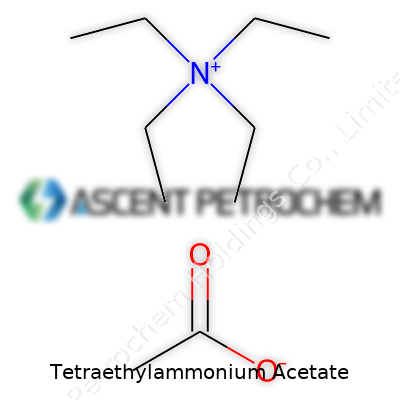
Chemically, the ‘tetraethylammonium’ part gives the molecule a bulky, four-pronged structure. It stands as N(CH2CH3)4 in shorthand. The acetate portion — basically, the salt you get from acetic acid and an alkaline base — attaches and rounds things out. The result sits somewhere between a routine salt and a clever biological tool. Students often puzzle through why this structure affects electrical signaling so specifically, which paints a picture of how chemical design leads to targeted impacts on biology.
Now, why does anyone care about all this outside a university context? Take a look at how drugs are developed, how new physiology textbooks are written, or even how nerve poisons get studied. Going through my own time with neuroscience researchers, I watched teams dive headlong into these compounds to figure out minute changes in current through nerve cell membranes. Without the precise blocking or allowing of ions, you simply don’t get action potentials — those electrical impulses that run through our bodies. Tetraethylammonium acetate, with its exact formula of C8H19NO2, turns into a key for unlocking complex questions about heart rhythm disorders or experimental therapies.
Still, this chemical needs respect. Some related tetraethylammonium salts have reputations for being tricky around skin or eyes. Safe lab practice and careful planning make a difference, especially in crowded university departments. Pointing out these risks isn’t meant to scare but to instill smart habits early on. Learning to understand and handle potentially irritating compounds grows confidence and keeps research progressing.
On the solution front, there’s no single answer for safer chemical research, but a good approach involves stronger oversight, real hands-on safety training, and better labeling. Some labs now use digital tracking for chemical storage and waste, which I found both reassuring and easy to use. Educating every new technician about what chemicals like tetraethylammonium acetate actually do, where they help, and what risks they carry builds a foundation for both clever discoveries and safe workplaces.
Nobody gets far in science without bumping up against a complicated name or two. Tetraethylammonium acetate, while not famous outside niche circles, helps push our understanding of nerve function with its formula — C8H19NO2 — and reminds everyone in the lab to keep both curiosity and caution close at hand.
Tetraethylammonium acetate doesn’t usually make headlines. Yet, a closer look reveals some things that matter both in the lab and anywhere chemicals get handled. Most people outside of chemistry circles have never heard of this compound, but inside laboratories, it’s not unfamiliar. Used for its role as an ion channel blocker and in a handful of organic reactions, this salt sometimes appears in research instructions and chemical catalogs. Skipping past the tongue-twisting name, people should ask: is it safe, or does it bring trouble along with its usefulness?
Eyes tend to glaze over when technical documents warn about “toxicological effects” or “acute exposure.” Those aren’t just labels. Tetraethylammonium acetate carries risks far greater than table salt or vinegar. Researchers know that quaternary ammonium compounds like tetraethylammonium can mess with the nervous system. Animal tests show that it can block potassium channels in nerves and muscles, which can disrupt heart rhythms and even breathing. A handful of lab exposures have resulted in nausea or muscle weakness, underlining the need for caution when handling it.
If someone gets careless—maybe skips gloves or forgets to check the fume hood—this chemical could irritate the skin or eyes. Inhaling dust or vapors could irritate the lungs. While a single accident might not end up in the emergency room, repeated exposure or enough contact in one incident could spark trouble, especially for those with breathing problems or allergies.
Most chemical safety boils down to how much and how long. Small spills or brief encounters rarely end up causing irreversible damage, but repeated use without proper habits can set the stage for chronic health issues. Many labs today take precautions seriously, thanks in part to widely shared stories of “what went wrong” in the past. Research on similar ammonium salts shows their knack for slipping through gloves made from the wrong material, so nitrile or neoprene options tend to get picked for protection.
Dealing with chemicals isn’t just about keeping an incident report blank. Good ventilation makes a difference, especially with something that could spread as a fine powder or a vapor. Never trusting bare hands, using splash-proof goggles, and keeping a working eyewash nearby take some of the worry out of mix-ups. Labels and training don’t mean much if ignored in the rush of day-to-day work, so peer reminders matter, too.
Yet, beyond the lab bench, there’s a broader point. Hazard isn’t only about immediate danger; it also touches on waste handling, environmental effects, and what happens long after the bottle gets used up. Chemical regulations push for safe disposal because runoff or landfill leaks can send these compounds into water and soil. Once there, the story gets harder to track, but lingering residues create risks for wildlife and maybe us, downstream.
Balancing scientific progress and personal safety draws on real information—fact sheets, hands-on training, and honest talk about risk. With chemicals like tetraethylammonium acetate, thorough respect for the hazards can mean fewer close calls and healthier workplaces. Labs that treat these risks with the seriousness they deserve stand a much better shot at keeping everyone safe.
I’ve spent enough time around university labs and chemical stocks to know storage isn’t just a box-ticking job. Tetraethylammonium acetate shows up in many research areas. People use it in chemistry departments, biotech startups, and sometimes commercial labs. Handling it gets more complex the more you realize that a slip-gone-wrong can mean real trouble—unsafe vapor, ruined research, health hazards, or liability headaches. If you’ve ever cleaned up after a careless spill, you never forget the lesson.
This salt brings some challenges. It absorbs water from air, clumps or degrades when left exposed, and reacts if mixed with the wrong substances. Its toxicity isn’t the worst, but it’s not something you’d want to touch without gloves or breathe in hour after hour. Safety sheets back this up and so do old hands in the lab—everyone who’s handled it remembers the sharp, prickly smell and the slight sting if you’re not careful.
I learned quickly that there are no shortcuts with chemicals like these. The main thing: skip the open bench and move straight to dry, tightly-sealed storage. Humidity creeps in fast, making powder sticky and unreliable for experiments. A desiccator, preferably with working silica gel, keeps the worst moisture out. I once saw a batch stored in a regular cupboard; it was ruined in weeks and cost the lab days of re-ordering and waiting.
Light can mess with compounds, causing breakdowns that might not always show on a basic inspection. Amber glass bottles cut down light exposure and give an extra layer of protection. Find a spot away from direct sun or heat vents—temperature swings can break down the salt faster than anyone expects.
Organizing chemicals only by the alphabet sometimes means storing things together that never should mix. It pays to separate organics from strong oxidizers or acids. Labels in plain language, not just chemical codes, help even a sleep-deprived grad student avoid easy mistakes.
If you spend much time around chemical stocks, double-checking the safety sheet becomes second nature. While most labs keep these digital now, printing a sheet and taping it inside storage helps new staff and visitors. I’ve been burned by out-of-date directions once or twice, so keeping up-to-date paperwork saves time and worry.
Inventory logs matter more than people admit. Items like tetraethylammonium acetate, which expire or degrade quickly, call for a “first opened, first used” system. Rotating stock and tracking use by date makes sure you don’t discover ineffective chemicals halfway through a process. It also helps minimize waste and keeps costs down, two problems that show up later during audits or funding reviews.
Spill kits and fume hoods can look like overkill, but most near-misses I’ve seen started with chemicals left open or splashed during hurried weighing. No one likes to suit up, but a pair of decent gloves and a quick check that the exhaust fan works turn an accident into just another Thursday. Small routine, big payoff.
Storing tetraethylammonium acetate isn’t just about following some dusty manual. It means building better habits, asking questions when stocks seem off, and sharing advice between old hands and rookies. Anyone who’s dealt with cleanup after a sloppy job knows—nobody regrets making things safer. In my experience, paying attention up-front saves far more time, trouble, and money than most people expect. That’s a lesson worth repeating.
A bottle of Tetraethylammonium Acetate (TEAA) in the lab is more than a label and a cap. Purity means everything in synthesis and analytical work, especially for quaternary ammonium salts like TEAA. Whether you’re prepping for HPLC buffer, doing protein work, or crafting ionic liquids, impurities easily derail a whole set of experiments. TEAA, with its common use as an ion-pairing agent, comes with purity standards that protect results and reputations.
Most suppliers offer TEAA at 98% purity or higher. I’ve never seen a reputable catalog go lower than that, though a jump to 99%+ usually comes with a steeper price tag. Reliable sources such as Sigma-Aldrich and TCI list both purity and a breakdown of possible impurities. Water content, for instance, should sit below 1%—anything higher leads to trouble in nonaqueous chemistry. Chloride, sulfate, and nitrate anions must be tightly controlled, as should residual amines and acetate levels.
Trace metals like iron, sodium, or calcium deserve a hard look as well. These sneak in if a manufacturer doesn't thoroughly rinse reagents during crystallization or washing steps, and they ruin sensitive applications in electrophysiology or proteomics. Any major supplier will show elemental analysis and guarantee metal content under a few parts per million. Organics, like residual solvents or unreacted alkyl halides, rarely get flagged in catalogs, but a burned-out pH probe or a spurious chromatogram peak will reveal them fast.
During chromatography, a drop in ionic strength or a rogue contaminant can throw off retention times, pump relics into the detector, and crash overnight runs. I’ve watched buffer mixers curse an unexpected conductivity increase, only to trace it back to poorly purified TEAA. An incorrect acetate-to-tetraethylammonium ratio skews outcomes, affects stability, and eats away at precious data quality.
In nerve signaling studies, poorly purified TEAA messes with patch-clamp rig readings. For environmental or food safety testing, a contaminant often mimics or masks an analyte. 99% purity looks good on paper, until that last 1% gives you noise where you expect clarity.
Buyers rarely stop and question how a purity number gets measured. Conductometric titration, NMR, and ion exchange chromatography can run side by side, but not every lot gets the same attention. When a certificate of analysis isn't clear, I call tech support and ask for actual data—chromatograms, NMR spectra, or even full elemental breakdowns. If my experiment depends on the tightest controls, I’ll sometimes run my own verification. Trust comes from shared standards backed up by documentation, not price points or brand names.
Any lab serious about its data keeps a log of supplier changes, batch numbers, and COAs. Some go further, sending batches for external verification. Tighter regulations, automated batch tracking, and open sharing of real analysis results (not just catalog claims) push the market in a better direction. If you ever troubleshoot failed runs or inconsistent data, look closely at your TEAA—and don’t let anyone shrug off purity specifications as boring paperwork. Behind every small number and buried impurity, real results either come together or fall apart.