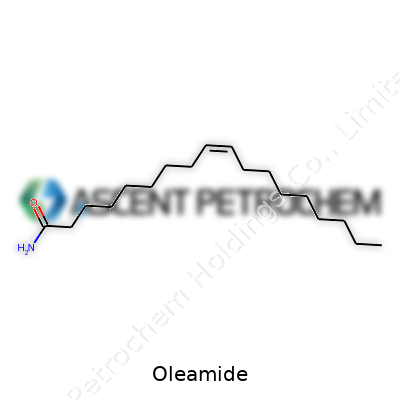
Oleamide didn’t just pop out of nowhere. Early researchers first spotted it in the body, especially in the cerebrospinal fluid of sleep-deprived animals. In the 1950s and 60s, people noticed that something in the brain signals fatigue and those clues pointed toward this fatty acid amide. As chemistry labs grew more sophisticated, scientists learned to synthesize oleamide on a larger scale, which brought new possibilities. Plastics and industrial chemical manufacturers began exploring how they could use this molecule to give plastics a more slippery surface and make food packaging less sticky. Over the decades, each advancement in production and analytical instrumentation increased interest in oleamide, driving both curiosity and commercial application.
For me, oleamide always looked like the Swiss Army knife of fatty compounds. Industry shops treat it as a slip agent, which helps plastics manufacturers keep their films from sticking together or getting scuffed in machines. Labs know it on another level—as a compound that turns up in biological signaling, especially in sleep studies. Its foundation in both industrial chemistry and biological science means people from wildly different fields rely on a strong understanding of its properties and behavior.
Oleamide comes as a pale, waxy solid with a faint greasy touch if you hold it at room temperature. It melts around 71°C and dissolves easily in a bunch of organic solvents, including chloroform and hot ethanol. Slightly soluble in water, it resists breakdown in regular conditions but reacts quickly if other powerful reagents come into play. Molecularly, it sports a long hydrocarbon tail attached to a simple amide group. This setup gives it both oily and slightly polar characteristics. For those mixing it into plastic, the chemical’s affinity for long carbon chains means it migrates toward the surface, cutting surface friction—no fancy equipment required.
If you work in manufacturing, you probably see oleamide sold in pellet or powder forms, with purity levels often stated at 99% minimum by weight. Suppliers ship it in lined drums or heavy-duty bags to keep out moisture. Labeling usually covers physical form, net weight, storage temperature suggestions, and hazard identifiers. There’s always a lot code so quality tracking goes smoothly from mill to loading dock. Technical data sheets call out melting point, solubility data, and any extra certifications—REACH or FDA compliance, for example—that signal it meets the needs of specific markets like food packaging or medical plastics.
Chemists generally prepare oleamide by reacting oleic acid with ammonia or an amine under heat and vacuum, then purifying the product through distillation or recrystallization. This tried-and-true approach uses readily available feedstocks (animal fats or plant oils). Quality hinges on control over reaction temperatures and removal of side-products, which, if left unchecked, affect how it works downstream. Small impurities wouldn’t matter as much in industry lubricants, but anyone making food-grade films expects a clean product. Big plants use closed-loop reactors and solvent stripping to keep the process in line with safety and environmental regs.
Oleamide stands up well to most stuff you throw at it. If you pump in strong acids or oxidants, it does break down, turning into products like oleic acid or smaller amides. Some factories like to tweak its structure by hydrogenating it to stearamide, which gives a higher melting point and a slightly stiffer final polymer additive. In biology circles, scientists sometimes modify oleamide through conjugation, sticking other molecules to it for research on neurotransmitter systems or drug development. Each change in structure shifts how it interacts—whether with machines, people, or animals.
Ask a room full of chemists about oleamide and you’ll get terms like “cis-9-octadecenamide” or “oleic acid amide.” Companies brand it under everything from slip agent numbers (“Slip 18,” “C-18 Amide”) to more descriptive names like “oleylamide.” In catalogs, you might spot it under CAS No. 301-02-0. If you work in a company shop, most purchasing agents prefer product names matched with regulatory codes to make sure nothing goes missing in translation between supplier and warehouse.
Worker safety sticks out as a top concern, especially in big plants. Oleamide doesn’t carry the punch of really hazardous chemicals, but it still poses risks if somebody gets it on their skin or inhales the dust. Material Safety Data Sheets warn people to avoid breathing in powders, to use gloves, goggles, and store the sacks in a cool, dry place. On the machine line, dust extraction and good general ventilation cut down on workplace exposure. Industrial hygienists check the area routinely—standards from OSHA, REACH, and local environmental health agencies all play a part. No one wants a fine or a sick worker slowing the flow.
I see oleamide almost everywhere, even if people don’t realize it. It goes into polyethylene and polypropylene films to keep everything moving slick in food wrapping machines and electronic component lines. The cosmetics world picks it for creamy lotions or as a pigment dispersant in makeup. In some labs, it ends up in research on sleep, acting as a signaling agent to help unravel what drives biological rhythms. Pharma groups test it for impacts on the endocannabinoid system, looking for clues about how molecules like it control responses in the brain. In textiles, it serves as an anti-static and slip booster—every roll of synthetic fabric probably relies on it.
Academic and industry labs keep hammering away at what oleamide can do. Some pharma researchers build derivatives that hang around in the bloodstream longer, hoping for a new anxiety or sleep aid. Polymer scientists develop blends that tweak slip rates and surface feel, fine-tuning everything from candy wrappers to synthetic leather. Analytical chemists improve ways to spot tiny amounts in biological samples, making sure clinical studies get accurate reads. With each round of experiments, labs report new interactions—especially involving neurological effects and how cells communicate.
Nobody wants a surprise from a common additive. Toxicology teams have run a host of animal studies to figure out how safe oleamide proves both for factory workers and consumers. Most reports point to low acute toxicity by oral, dermal, or inhalation routes, at least based on rat and mouse models. The chemical doesn’t seem to bioaccumulate or cause major irritation in skin contact, though researchers urge more digging into long-term exposure and its possible links to neurological functions. As it appears naturally in the body, regulators consider it fairly benign in standard use, but food safety agencies in various countries require strict limits and purity reviews, especially for products touching food.
Interest in oleamide won’t dry up soon. With wider adoption of biodegradable plastics and growing focus on safer chemical alternatives, demand for bio-based slip agents rises. Researchers try newer synthesis methods using enzymes or greener solvents, making the compound friendlier to people and the planet. Advanced medical studies suggest molecules related to oleamide may deliver calming effects or help unlock how sleep happens in the brain. In my experience, commercial labs gain extra ground each year, blending traditional production with cutting-edge R&D. Smart regulations, forward-thinking chemistry, and curious researchers keep driving this fatty amide beyond its simple role as a plastic slip agent and into fields nobody predicted decades ago.
Walking through a supermarket, shoes probably squeak across the slick surface of a cling wrap box. Oleamide takes credit for that smooth feel. In manufacturing, this compound acts as a slip agent, helping prevent plastic sheets from sticking together inside those wrappers, bags, and containers. Without it, peeling a new trash bag from the roll or opening a loaf of bread would turn into more of a wrestling match.
Plastics need a way to stay functional under pressure. If you’ve ever noticed how sealing surfaces of food packaging seem almost silky, there’s a good chance oleamide helped there. Used in tiny amounts, this molecule moves to the surface of plastics, reducing friction so parts glide cleanly past each other. Compared with other slip agents, oleamide finds its place because it’s compatible with polyethylene and polypropylene – two of the most common plastics in shopping bags, bottle caps, and food containers.
Not everyone realizes that oleamide also plays a role inside the human body. First discovered in the brains of sleep-deprived animals, this fatty molecule builds up in the body as bedtime nears. Some scientists believe it sends signals that encourage sleep, binding to receptors in the brain linked to mood, rest, and pain response. That connection sparked years of research into natural sleep aids and the endocannabinoid system – the complex set of signals governing sleep and relaxation.
Still, evidence in humans remains mixed so far. The FDA has not approved supplements containing oleamide for sleep improvement. Reports in academic journals have noted its calming effects in animal studies. Until safety in people gets clearer backing, sleep-focused products rarely mention it directly.
Anyone working on factory floors, car repairs, or bicycle tune-ups finds the effects of friction unavoidable. Grease on gears often contains additives like oleamide. Its slippery nature means parts slide past each other without wearing down. This isn't just about convenience: longer-lasting machines and a break from replacement cycles save costs for families and businesses.
Sports gear, shoes, and even rope can benefit from coatings containing oleamide. Climbers trust that a quick tug won’t turn into a stuck knot, thanks partly to specially treated fibers. Performance products use oleamide to resist sticking and stay effective longer, hidden from sight but vital to daily function.
Like any chemical, oleamide deserves careful handling. Some questions swirl around its safety in food plastics and direct contact items. Regulatory agencies in the US and Europe set exposure limits, calling for further research into accumulation in food or water. Studies so far show oleamide doesn’t leach easily from finished plastics, but more long-term data would help answer lingering concerns.
After decades spent in labs and factories, oleamide still pushes science to consider balance: efficiency versus health, immediate function versus lasting effects. Engineers and health experts keep asking the right questions — data on environmental persistence and effects on wildlife continue to emerge. Anyone picking convenience products from a store shelf benefits from tighter regulation and transparency. As more information surfaces, safer use and smarter design should keep pace.
Oleamide often pops up in conversations about sleep aids, natural supplements, and even plastics manufacturing. As a fatty acid amide, it’s found in the bodies of animals and humans. Researchers discovered it in the 1980s when studying sleep patterns in rats. Since then, curiosity about its use in supplements has grown. Friends, clients, and family have often asked me about the safety of trendy ingredients like oleamide. I look at the hard data, and not just the marketing buzz.
People want better sleep, less anxiety, sharper thinking. That’s why substances like oleamide catch interest. Some supplement manufacturers advertise it as a natural compound for relaxation. At the same time, food packaging companies use it as a slip agent – not something meant for the dinner plate, but as a material enhancer. So here is where science, health, and commerce meet, and confusion can slip in.
In animal models, oleamide helps to induce sleep. Scientists found that rats injected with it tended to doze off sooner, suggesting a link to sleep regulation. Some believe it interacts with cannabinoid receptors — the same ones that compounds in cannabis affect.
Still, showing effectiveness for sleep in rodents doesn’t guarantee the same impact—or safety—for people. Research on humans is almost nonexistent. The FDA hasn’t approved oleamide for medical use, nor evaluated its safety as a supplement. The European Food Safety Authority points out concerns about its migration from packaging into food, but clear guidance on dietary intake does not exist. I often tell folks: if something is going into your body, demand solid evidence of its safety.
We know the human brain produces oleamide in small amounts. That doesn’t make high-dose supplements risk-free. High levels in the blood can appear after stroke or brain injury. No-one has proven what, if any, dose is truly safe for ongoing use. Long-term consumption hasn’t been studied. The plastic industry uses it in packaging for its slipperiness, not because it belongs in our diets.
One risk I worry about: supplement contamination. Sourcing lab-made oleamide from questionable suppliers could introduce impurities. People believe “natural” means “safe,” but that’s wishful thinking. Natural substances cause harm every day if taken unwisely.
I encourage clients and readers to look for third-party lab results, transparent sourcing, and regulatory approval before buying into supplement hype. Oleamide might play a role in medical research, but until health authorities publish human data, skepticism serves you better than blind trust.
If you’re considering any supplement that affects the brain or mood, consult your doctor—especially if you already take medications or manage other medical conditions. Effective sleep and mental health support come from building good habits, addressing underlying medical issues, and choosing proven therapies over untested shortcuts.
In my experience, people thrive when they seek sleep and health solutions backed by experience and science, not marketing. Herbal or chemical, every new trend deserves scrutiny. Supplements with “natural” marketing don’t always offer transparency or safety guarantees. Before adding anything extra to your routine, especially compounds like oleamide, ask for proof. Trust grows when health professionals and researchers put real evidence at the center of the conversation.
Oleamide often shows up in conversations about sleep and mood supplements. The compound, found naturally in the body, helps keep the nervous system relaxed. Plenty of folks are curious about it since some products market oleamide as a way to encourage better sleep or manage stress. Despite these claims, questions stick around about safety, especially about unwanted side effects.
Spending time online, especially in supplement forums, reveals that some users complain of grogginess and sluggishness after trying oleamide. It looks like their brains don’t bounce back quickly in the morning. A few users report headaches and dry mouth too. One study from the National Center for Biotechnology Information points to mild changes in coordination and reaction time in rodents given high doses, a sign that nerves and reflexes might slow down if someone takes more than recommended.
People taking mood supplements want support, not surprises. High doses of oleamide, based on limited animal studies, may leave someone feeling foggy or slow. Fatigue pops up in anecdotal reports as well, meaning some users might benefit from starting with a lower dose and watching closely for how they feel. Scientists say more human research is necessary, but it’s smart to pay attention to shifts in memory or concentration, especially if combining oleamide with other supplements.
Most stories focus on how oleamide promotes sleep. Problems begin if it kicks in too strongly. Some users describe drowsiness lingering well into the morning or trouble doing daily tasks. Sleep lasts longer, but quality isn’t always better. For people who work shifts, drive early, or juggle family demands, that extra drowsiness could put safety at risk. Choosing supplements carefully and tracking how they stack up against regular sleeping habits becomes essential.
Mixing supplements with prescriptions can bring unexpected results. Some researchers warn that oleamide may influence the way enzymes in the liver work, including those that process antidepressants, anti-anxiety medications, and even alcohol. By affecting these enzymes, oleamide could either increase or decrease the effects of certain drugs, creating side effects that surprise both the user and their doctor. Sharing any supplement use with a healthcare provider always helps avoid nasty surprises.
Research on long-term oleamide intake is thin. Most safety information comes from short animal studies, not long-term monitoring in humans. The body may break down oleamide naturally, but it’s uncertain if taking larger amounts for weeks or months stays safe. It makes sense to wait for more research before anyone commits to daily use over a long period.
Anyone considering oleamide should pay attention to sleep quality, monitor alertness, and listen to their own body. If new symptoms crop up after starting a supplement, it might be worth taking a break or switching brands. Leaning on reputable sources, reading up on the latest science, and keeping healthcare professionals in the loop all help avoid avoidable risks. Supplements, even the ones that appear natural, carry side effects worth respecting. Responsible use starts with honesty and caution at home.
Oleamide comes up in conversations about sleep, relaxation, and even cognitive health. Folks stumble on it in forums, often alongside topics like CBD, natural supplements, and sleep aids. Its appeal grows from anecdotal reports about chill-out benefits, with people looking for alternatives outside prescription sleep medicine. Some science backs up its effects, since oleamide appears to interact with receptors in the brain that influence sleep and mood. You find it naturally in the body, especially when sleep starts knocking at your door.
No well-established official dosage exists for oleamide supplements. This isn’t surprising, given it mostly stays out of mainstream medicine. Scientific studies on humans have not gone far enough to deliver that golden number—the “take X mg” advice that appears on the label of your vitamin D or ibuprofen bottle. Most information comes from animal research, online anecdotes, and the rare small study.
Real users often start with very low doses, sometimes around 50 mg, because nobody wants to wake up groggy. Some ramp up to 200 mg or even 400 mg at night, especially if they haven’t felt much from lower amounts. In online communities, several folks mention splitting doses, or starting tiny and slowly stepping up to avoid unwanted sleepiness during the day. Others stick with a cautious “less is more” approach due to the lack of deep research. If you ask around, you’ll hear this phrase a lot: “Find the lowest dose where you notice a benefit and don’t push it.”
A supplement without government-approved dosing means there’s a real risk for people with certain health issues or those on prescription medications. Because oleamide can make you sleepy, stacking it with other sedatives or alcohol isn’t a good idea. The supplement market can be wild—labels may not always match the contents. Reputable brands with third-party testing make it less likely you’re swallowing unknowns, but nobody guarantees purity and safety the way pharmacies do for prescription pills.
I remember hunting for a better sleep option after days filled with blue screens and restless nights. Like many, natural sounded better than pharmaceutical, so I poked around the supplement aisle and ended up reading endless forum threads. The big lesson: take your time, do your homework, and pay attention to how you feel. Some friends tried 100 mg, felt nothing and quit, while others swore even 50 mg made their nights smoother. A couple fell into traps with high doses causing sluggish mornings.
Healthcare providers stand on safer ground than Reddit users. If you have ongoing health problems, medicines, or doubts, a quick chat with your pharmacist or doctor opens the door to honest opinion—not hype. Pharmacists know about drug and supplement interactions. They can spot risky signals that online hype misses. If you feel tempted to try something new, checking with them before you reach into your supplement jar is just smart life practice.
The missing research on long-term safety and proper dosing shows why more studies matter for those considering oleamide. People want better sleep, clearer thinking, and tools to manage daily life. Trusted information drives better choices. Until we know more, starting low and asking questions beats going in blind every time.
Oleamide might sound exotic, but this fatty acid derivative turns up in surprising places. In our bodies, it plays a role in sleep regulation. Some folks might remember hearing about it as the component that makes St. John’s Wort supplements more “relaxing.” A quick browse on the internet brings up sales pages for capsules, powders, and even vape liquids containing this chemical, usually promising calm nights and smooth moods.
Most countries around the world run strict lists of things you just can’t buy at your local store—opioids, certain synthetic cannabinoids, new designer drugs. These lists rarely ever mention oleamide. In the United States, the DEA doesn't classify it as a controlled substance. Cracking open the FDA’s supplement ingredient databases, oleamide remains absent, neither officially recognized as a supplement nor flagged as illegal. On paper, this means you won’t land in jail for holding some or ordering from a website. Europe’s situation looks similar; agencies haven’t listed it as a drug or chemical of concern, though regional food or supplement rules create gray areas around labeling and import.
Oleamide attracts attention because it walks an odd line between nutritional supplement, natural body compound, and chemical additive. Early studies discovered it in sleep-deprived rats, where it seemed to smooth the path to slumber. Later, manufacturers saw a market in people searching for something to help with rest or relaxation that didn’t bring the baggage of pharmaceuticals.
In real life, products containing oleamide don’t usually sit next to Tylenol or Benadryl. They show up in niche supplement shops, sometimes in blends with melatonin or CBD. This market exists in the open, but operates more like a gray market than a proudly regulated industry. Companies shield themselves by labeling bottles “not for human consumption” or “for research purposes only.” Nobody asks for an ID at checkout, and there’s not much quality control.
Since government and consumer protection agencies haven’t weighed in, nobody’s demanded broad safety testing. Peer-reviewed research on humans remains scarce. One study here, another anecdote there. Some people try it for sleep, stress, or just curiosity. They look for user testimonials on online forums, Reddit, or wellness blogs. Sometimes things feel fine; other times someone posts about unpredicted drowsiness or weird interactions with other supplements.
All it takes is a bad batch or one foolish vendor to ruin that quasi-legal standing. In recent years, other “unregulated” compounds—kratom, phenibut, certain CBD isolates—moved into legal crosshairs after hospitalizations or high-profile abuse cases. This usually happens because rules didn’t update as quickly as the supplement market did. So far, oleamide hasn’t sparked panic, but nobody’s watching too carefully, either.
People looking up oleamide might have trouble figuring out what, exactly, they’re buying. It makes sense to take things slow. Ask questions at the point of sale, dig for certificates of analysis, and ignore anyone promising miracle cures or sidestepping transparency. Physicians and pharmacists probably won’t have answers, but at the bare minimum, informing yourself about what’s actually in the stuff, and what’s been reported in trustworthy medical sources, keeps silly mistakes in check.
At the end of the day, legality only tells part of the story. Personal safety and honest information matter just as much. Sometimes the supplement market offers gaps where regulation hasn’t caught up. In those spaces, personal research can save a lot of headaches.